
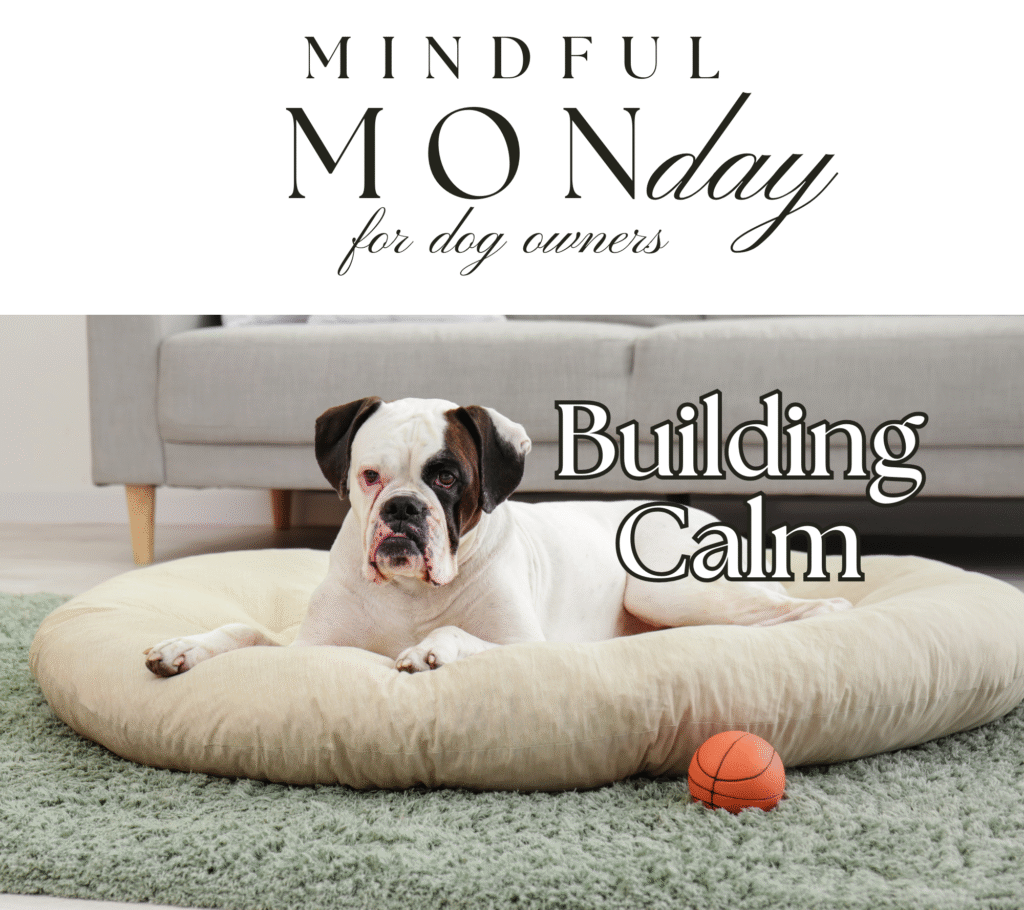
 This week, we’re taking a look at something dog owners often overlook—but something that quietly supports every other part of your training.
Building calm in dogs makes it easier for them to focus and respond.
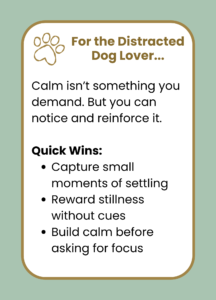
Before we move forward, it’s important to clarify what we mean by “training calm.” Calm is not something we can demand or force. It’s something we practice.
We practice by capturing small moments of relaxation and noticing them. We acknowledge them. We reinforce them.
I’m talking about your dog—but I’m willing to bet you might benefit from this exercise too.
As you begin to notice those moments of peace in your dog, my hope is that you’ll allow yourself to take a deep breath or two as well. Even soaking up a micro moment of serenity counts. Calm is contagious.
And if you’re thinking, “Capturing calm?! My dog is never calm!”—I see you.
It’s so easy to focus on the overwhelming behaviors because they’re loud, obvious, and constantly asking for our attention. But I promise you, those calm moments exist. At first, they might only last a second or two—but seconds matter.
Before we dive in, we do need to set realistic expectations.
We can’t train energy out of a dog. If you have an active dog, they still need appropriate outlets for that energy. Calm training works best when your dog’s basic needs are being met.
It’s also important to realize that some energy outlets can spike adrenaline rather than reduce it. So, to set this lesson up for success, timing matters.
If your dog has just come inside from a game of fetch, we’ll want to help them transition from party animal to zen master. That transition can be supported through calming activities like sniffing, chewing, or licking.
In fact, let’s intentionally work that into today’s exercise.
Teaching Mat / Station Calm
Choosing the Right Station
To help a dog relax, you first need to choose the right station—their bed or mat. There are plenty of options, but your dog will almost always have a preference. When we work with what they naturally like, they’re far more likely to choose to settle.
Some dogs (like my Chihuahua and Greyhound) prefer a soft, fluffy donut bed. Being able to nest makes relaxation much easier for them.
My German Shepherd, on the other hand, would have overheated on a donut bed. She preferred a flatter bed that still provided cushioning for her aging joints.
And if you’re thinking, “My dog chews everything!”—I see you.
I used to raise and train working dogs, and I still have my retired breeding Labrador from those days. She’s thankfully past the chewing phase, but I haven’t forgotten the absolute terror of her adorable offspring.
For dogs who chew, I’ve prefer these styles from K9 Ballistics:
- Elevated beds, which are harder for dogs to grab and destroy
- Tougher crate pads and beds designed for heavy use
These beds are pricier upfront, but when you’re not replacing them every few months, you often end up saving money—and stress.
Building Calm Exercise
As I mentioned in the introduction, we want to offer a transition activity before putting the bed down. Many dogs become excited by the movement of the bed itself, so we’ll set this up thoughtfully.
Start by tossing a small handful of treats or kibble on the floor so your dog has to sniff around while you place the bed near an area where you like to sit.
Sniffing activates your dog’s parasympathetic nervous system, which helps slow the heart rate and relax muscles. It also conveniently distracts your dog from the movement of the bed.
Once the bed is in place, toss a few treats onto the bed to encourage your dog to investigate it.
Then simply wait.
When your dog explores the bed calmly, gently praise and place a few more pieces of kibble on the bed. If they naturally lie down, praise and reward that as well.
I tend not to use a clicker for relaxation games. While clickers are fantastic tools, they can increase excitement. Here, we want to reinforce calm, so I keep my voice, movements, and delivery soft and slow.
I start with one minute at a time. During that minute, I look for signs that my dog is beginning to settle:
- Lying down
- Sighing
- Shifting onto one hip
- Resting their head
There are no cues and no expectations.
If your dog doesn’t choose to lie down at first, don’t stress. Trying to make them go to their bed will likely frustrate both of you. But if they offer even a second or two of relaxation, we can build from there.
Celebrate the smallest moments. Calm is built incrementally.
If your dog really isn’t interested in lying down, you can offer a chew for a bit. When they settle with it, gently praise and occasionally reinforce with calm, low-key treats.
Quiet takeaway
You’re not teaching your dog to do something here.
You’re teaching them how it feels to settle.
That skill is the foundation for focus.
Mindfulness:Capturing Calm in Your Dogs
Between training sessions, simply notice your dog.
When do they choose to lie down?
When do their movements slow?
Can you catch calm—or at least the moments when they’re closest to calm?
If your first reaction is, “My dog is never calm,” that’s okay. Instead of seeking perfect stillness, seek less intensity. Those moments count.
When you catch your dog resting or settling, gently praise and quietly reward them. Keep your tone soft. The goal isn’t excitement—it’s acknowledgment.
Try to make it a habit to intentionally observe your dog a few times a day, even if it’s only for a minute or two. Think of it as a brief check-in rather than a formal training session.
As you observe, you may also start to notice patterns. There may be certain times of day, environments, or situations where your dog is more likely to become overstimulated.
That information is valuable.
Noticing when calm is harder to access gives you insight you can use when planning future training sessions—or information you can share with your trainer to get more targeted guidance.
Troubleshooting: When Calm Feels Hard
“My dog won’t stay on the mat!”
Your dog is still learning that nothing happening can be rewarding. That’s a brand-new idea for many dogs.
Try this:
- Shorten the goal to 2–3 seconds of stillness
- Reward any calm choice (standing quietly counts)
- Let your dog leave the mat—returning calmly is part of the learning
Stillness is built, not forced.
“My dog keeps getting up!”
Regulation comes in waves. Movement often comes before settling.
Try this:
- Reward the moment your dog pauses, exhales, or softens their body
- Ignore fidgeting unless your dog seems stressed or escalated
Small signs of softening matter.
“My dog thinks this is a training session and keeps offering behaviors.”
Your dog is used to earning rewards through action, not stillness. You’re teaching a completely new skill.
Try this:
- Quietly reward when behaviors stop
- Delay reinforcement just long enough for calm to settle in—then reward promptly to avoid frustration
You’re teaching your dog how to do less. Baby steps help them connect the dots.
“I can’t relax either.”
Trying something new can feel awkward. And if you’re neurodivergent, there’s a strong chance perfectionism sneaks in (ask me how I know).
Your new mantra: Perfectionism is the enemy of progress.
Try this:
- Soften your shoulders if you notice they’re clenched
- Toss a few treats onto the mat; as your dog sniffs, take a slow breath—inhale, pause, exhale
- Let this be imperfect
You’re building behavior in small steps.
Any progress is still progress—and we can always build from there.
Conclusion: Why Calm Comes First
Calm brains process information better—and you already know that from your own life.
When you build consistent moments of calm for your dog, even if they’re short at first, you’re laying the groundwork for longer attention spans and more reliable focus over time. These quiet moments stack. They compound.
And if you found this site because you’re neurodivergent (like me), those moments matter for you too.
Shared calm supports shared regulation. When you slow down, your dog feels it. When your dog settles, your nervous system gets a break as well. This isn’t just dog training—it’s co-regulation.
So if all you accomplish this week is one peaceful minute on a mat, that’s not small.
That’s the foundation.
If you are enjoying mat work, you can teach your dog to place on cue. Check out my article on that here.
Please note: This post may include affiliate links. If you make a purchase through these links, I may earn a commission, at no additional cost to you.