
 Life can make training your dog at home feel hard. Between changing schedules, busy days, visitors, and general life chaos, dog training often slips to the bottom of the list.
If you’re overwhelmed but still want quick dog training routines or easy dog training games, you’re not alone. Any time life feels hectic, the goal shifts to micro-training sessions—short moments that take less than a minute and still help improve your dog’s focus.
I wish more dog owners spent time building their dog’s attention. Because when you improve your dog’s focus, every other obedience skill becomes easier. Attention is the foundation that makes daily life smoother, no matter what your schedule looks like.
So for the next five weeks, I’ll introduce a small, fun dog focus exercise every Monday that you can sprinkle into your everyday routine.
And within a few weeks, you’ll notice a real difference.
Your dog will check in faster, stay more engaged, and be easier to train—even in busy or distracting environments.
Why Micro-Training Works
Micro-training is one of the easiest ways to work with your dog without the overwhelm that many people associate with traditional dog training sessions. Instead of carving out time, gathering equipment, or planning a full routine, micro-training uses short dog training sessions—just a few seconds at a time—to build better focus and better behavior.
With micro-training, you simply practice one cue or one small behavior whenever you have a free moment. You’re not scheduling a session; you’re weaving easy dog training games into natural pauses in your day.
For example:
If you’re waiting for your kids to put on their shoes, you have time to ask your dog for one quick behavior—maybe a sit, a hand target, or a name-response. That 10–15 seconds of engagement builds your dog’s focus, strengthens their understanding of the cue, and reinforces the habit of checking in with you… all without adding anything extra to your to-do list.
It really is that simple.
Micro-training keeps your dog’s skills fresh, supports positive reinforcement dog training, and helps your dog stay connected to you—even during the busiest holiday moments.
This Week’s Focus Exercise: The Name Game Reset
I can already hear you saying, “But my dog already knows his name!”
I know.
But we’re starting here for a few important reasons:
- We want the first game to be super easy. Easy wins help your dog get excited about training and help you build the habit of working short, fun sessions into your week.
- I don’t just want your dog to know his name. I want him to LOVE hearing his name—so much that he automatically checks in, even with distractions.
- We almost always say the dog’s name before other cues. A happy, reliable check-in makes every other obedience skill easier.
I also use familiar behaviors in confidence-boosting training sessions, so even if your dog already responds to their name, this is a perfect way to reset their focus and rebuild engagement during a hectic month.
This game is simple, fast, and incredibly effective for improving your dog’s focus.
Setting Yourself Up for Success
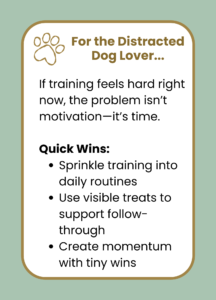
Before you start, set up a few reward stations around your house. If treats are visible, you’ll remember to play. Reward stations are just small, airtight containers filled with shelf-stable treats—something easy to grab in a micro moment.
This is especially helpful for busy families and neurodivergent dog owners (hi, it’s me!) who are more likely to skip training if rewards aren’t easily accessible.
How to Play the Name Game
- With your dog nearby, say their name once, in a neutral, friendly tone.
- Pause. Don’t repeat the name.
- The moment your dog orients toward you—even just a head turn—mark (“yes!” or a click) and reward.
- Do 3–5 quick reps, once or twice a day.
- Keep it playful, upbeat, and short.
As the week goes on, you can vary how far away your dog is when you say their name. But remember:
Only add distance or distractions once they’re reliably responding at a closer, easier level.
That’s how we build a strong, confident foundation using positive reinforcement dog training.
Why This Micro-Training Game Works
This simple exercise:
- Builds or refreshes a core obedience skill
- Helps dogs tune in faster during distractions
- Strengthens your bond through daily engagement
- Rebuilds connection after chaotic days
- Takes under 30 seconds
- Fits perfectly into quick dog training routines at home
Real-Life Moments to Play the Name Game
Here are a few simple moments you can fold the Name Game into. Look at your own daily rhythm and choose the spots that feel easiest. (Pro tip: place your reward stations exactly where these moments happen—this removes the biggest barrier to follow-through!)
Here are some suggestions:
- While waiting for water to boil
- During your morning coffee
- Before putting on shoes
- When you take a 30-second break from wrapping gifts
- While commercials are playing
- While waiting on family members to get ready
Of course, your list may look completely different—and that’s perfect. Start with just two anchor moments that reliably happen each day. You can always add more once you’re consistently successful.
The more contexts you train in, the more your dog begins to generalize that “my name = good things happen.”
Remember: The goal isn’t a long session. It’s simply noticing their attention and rewarding it. That’s it.
What to Expect With Consistency
A few minutes of this game each day can create a surprisingly strong foundation. These tiny training moments sharpen your dog’s focus and deepen your connection in a way that feels almost effortless.
Within just a few days, you’ll likely notice your dog checking in faster—and maybe even responding during mild distractions. Keep a little kibble or a couple of treats in your pocket so you can reward those unexpected (but wonderful!) check-ins when they happen.
Small reps. Big impact.
In Conclusion
This week is all about strengthening a core skill that makes every other part of dog training easier. You might feel tempted to push your dog or “see how far they can go,” but remember my favorite mantra: Train, don’t test. A solid foundation now will pay off in smoother training later—especially when life gets busy.
Keep it easy. Keep it simple. Keep it short.
When you skip the overwhelm and focus on these tiny moments of connection, you’re actually building powerful habits: better focus, quicker check-ins, and a stronger bond with your dog.
Small steps. Big changes. Your future training sessions will thank you.
Please note: This post may include affiliate links. If you make a purchase through these links, I may earn a commission, at no additional cost to you.