
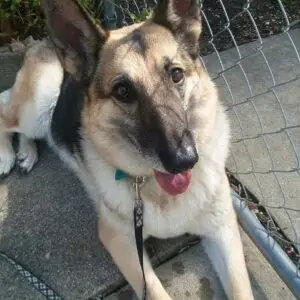
 If you follow me on Facebook, Instagram, or LinkedIn, you already know that I lost my heart dog this week. Havoc’s passing has affected me in ways that I’m still processing, but it also reminded me just how much she reshaped my life simply by being in it.
The truth is: she’s a dog I should never have adopted.
Everyone said so. My family tried to talk me out of it.
My head knew they were absolutely right… but for once, my heart overruled all logic.
And thank goodness it did—because Havoc became one of my greatest teachers.
She taught me how to slow down in a world (and a mind) that constantly demands speed.
She taught me the value of noticing tiny moments of joy and intentionally building them into my day.
And she taught me the quiet, essential truth that your energy matters… and that life changes when you surround yourself with beings who match that energy.
Havoc didn’t just share my home.
She reshaped my nervous system.
She softened my edges.
She showed me how to be present in a way I had never been before.
I Went Looking for a Cat… and Found My Heart Dog
In 2018, I lost my beloved greyhound, Sunny, to osteosarcoma. After nearly twenty years involved in greyhound rescue, I knew the risk — osteo is heartbreakingly common in retired racing dogs —, but nothing prepares you for how fast it steals a dog who was once pure strength and motion. Watching my dynamic athlete decline gutted me. I vowed I could not go through that again.
We still had my daughter’s Papillon to warm my lap and keep our home feeling full, so I told myself that was enough. And as dramatic as it sounds, anyone who has grieved a pet understands why this line from my favorite horror franchise hit me right in the chest:
“Loving someone is just delayed pain, isn’t it? Eventually, you’re gonna lose them one way or another.”
— Elise, Insidious: Chapter 3
My strange little silver lining? Sunny wasn’t cat-safe. Cats live longer. So I decided I would pour all my sorrow and softness into a peach-colored kitten we named Glen Coco.
Now, Glen Coco is truly a character deserving his own blog series — but you’re not here to read about cats. Let’s just say I became very attached. And because I wanted him to have the fullest, richest little feline life, I decided he needed a cat buddy.
So off I went to Meet Your Best Friend at the Zoo, a Metro Detroit event that brings together dozens of rescues offering both cats and dogs.
Here’s the problem: I’m still a dog trainer. I cannot physically walk past a dog without greeting them. So, of course, I wandered over to say hi.
And that’s when I saw her.
A quiet German Shepherd curled inside an ex-pen, avoiding the chaos. GSDs had recently become one of my soft spots — a few in my training classes had absolutely charmed me — so I knelt down. She walked over, sat beside me, and leaned in as I scratched her neck. Her eyes were soft and searching.
I started talking to her foster mom. This dog was estimated to be 8–10 years old and had been pulled from the kennel of a well-known breeder on the west side of Michigan. The details were kept intentionally vague — not to stir drama — but the truth was clear: the dogs were in rough shape. All five dogs that came from that property were heartworm-positive and had spent most of their lives in kennels with very little socialization.
Most people understand what that can mean: an under-socialized German Shepherd can be… a challenge. A misunderstood challenge. A heartbreaking challenge.
I told myself I was here for a kitten.
I kept walking the aisles, looking at cats.
But I kept circling back to her — the dog named Havoc.
This was absolutely not what I needed.
But before I knew it, I was rationalizing the impossible inside my own head.
So I went home to see if my family could talk me out of it.
And oh, they tried.
I was still shattered over losing Sunny, and now I wanted a senior, heartworm-positive, poorly socialized German Shepherd who might not have long? My husband stared at me like I’d lost my mind.
“I thought you went looking for a cat,” he said.
“I did,” I insisted. “I just… got confused. The ears are almost the same!”
He didn’t laugh.
Still, he agreed to meet her the next day. He was completely dead set on preventing this adoption. And yet, the second Havoc saw me, she quietly walked over and leaned into my leg like she already knew she belonged.
Her foster mom saw it too.
She admitted she’d considered keeping Havoc herself — they had a sweet bond — but when she watched the two of us together, she said, “I think she’s meant to be yours.”
My husband, still clinging to logic, reminded everyone that a cat was, in fact, the original plan. Havoc’s foster mom didn’t miss a beat. She smiled and said, “Well, if you adopt her, I’ll throw in a cat for free.”
I thought it was genius.
He thought it was insanity.
But he also realized that one senior German Shepherd was still fewer animals than one dog plus a cat… and suddenly he started softening. Or maybe he had just come to terms with the fact that I was just going to bring her home anyway.
The rescue agreed to a foster-to-adopt trial. “Take her home for a week,” they said. “If she doesn’t fit, we’ll take her back. No judgment.”
We loaded her into the car, and I asked, “What should we call her?”
Without hesitation, Mark said, “You’re not changing her name. The only part of this I like is her name. Havoc. Because it’s accurate.”
And just like that, Havoc came home — the dog I never intended to adopt, and the dog who ended up changing everything.
Havoc’s Past: A Survivor With a Silent Strength
By now, you’ve probably guessed that Havoc stayed well beyond her one-week trial. But it didn’t take long for me to understand just how much her past shaped the way she moved through the world.
For the first two days, she barely left her crate. She’d quietly follow our Papillon outside to potty, then run right back to her safe space. She refused food. She avoided eye contact. Her body language said everything: she didn’t yet know how to trust it.
That same weekend, I happened to be the guest speaker at a greyhound event (shout out to GEM!). Inside my thank-you gift bag were Stella & Chewy’s Freeze-Dried Dinner Patties — pure luck, pure timing. On a whim, I offered one to Havoc… and she immediately gobbled it down. It was the first spark I saw in her. So I used that tiny spark as a bridge. I stopped pushing her to “be brave” and instead let her choose her pace, her moments, her movement. Slowly, with the help of those magic treats, she began to explore.
Like many German Shepherds, she was a one-person dog. She chose me almost instantly. She liked my older son. Everyone else was tolerated, but she kept a quiet distance. Her circle of safety was small — but she allowed me inside it.
Because she had likely spent her first eight years in a breeding kennel with very little exposure to the world, I knew we had to go slow. Very slow.
German Shepherds are naturally observant, thoughtful, and deeply sensitive. When they miss out on early socialization — the sights, sounds, people, textures, experiences that build emotional resilience — it’s as if part of their development freezes in place. They don’t become “bad dogs.” They become underprepared dogs navigating an overwhelming world.
With dogs like Havoc, progress is possible, but it requires:
- predictable routines
- slow, steady exposure
- respect for their sensory limits
- and most importantly… patience
- Realistic goals
Her world could expand, but only in small, mindful steps. I couldn’t expect her to transform into a totally different dog with a wide social comfort zone. She wasn’t broken — she was simply inexperienced.
So before I created any kind of “training plan,” I did the most important thing any dog owner (especially an ADHD, easily-overwhelmed one like me) can do:
I slowed down, connected, and observed.
And in that stillness, I started noticing the quiet strength she carried — the resilience, the gentleness, the willingness to try again. Her past shaped her, but it didn’t define her. It simply asked me to meet her where she was.
How Havoc Taught Me Mindfulness
Normally, when I bring a new dog into our home, I ease them into decompression and then jump into training. Most dogs love the chance to earn treats in short, fun sessions. It helps them adjust and builds our bond.
But Havoc was different.
She needed more time, more space, more softness. Her fearfulness told me to slow down. Her heartworm disease made me cautious about adding stress. And since she couldn’t tell me how she felt, I spent a lot of time watching, listening, and letting her set the pace.
That was the beginning of my mindfulness journey with her.
Here’s what she taught me.
Lesson 1: Presence Over Productivity
Too much movement made Havoc nervous. My first goal wasn’t training — it was safety.
As she slowly began exploring the house, I let her decide:
- when she wanted company
- how close she wanted to be
- when she was ready for touch
- when she just needed to watch from a distance
When she started seeking me out for affection, I treated every approach as sacred. I never missed an opportunity to simply be present with her — no agenda, no training goal, no pressure to make progress.
The goal was “presence over productivity,” but the truth is, this was productive. It helped her feel safe in her new family, and that foundation mattered more than any obedience cue ever could.
This lesson became even more powerful in her final weeks. When our time became visibly limited, I stopped what I was doing every single time she came to me for cuddles. I don’t regret a single moment. The tasks I set aside were still waiting when we were done — but those moments with her were fleeting and irreplaceable.
Havoc taught me that mindfulness isn’t something you practice someday. It’s something you choose in the moment.
Lesson 2: Creating Joy Lists
Life was stressful for Havoc — new home, new routines, new expectations, and a body recovering from heartworm. But she still found pockets of joy. Little things that softened her eyes and loosened her body language.
I started paying attention:
- digging in the yard
- splashing in the baby pool
- play with other dogs, especially puppies
- riding in the car
These tiny sparks inspired the creation of what I now call Joy Lists — one of my favorite ADHD-friendly tools for emotional well-being.
I didn’t want a single day to pass without Havoc experiencing at least one moment of joy. So, I made a list of what lit her up and created easy ways to weave those moments into our daily routine.
Joy became its own form of mindfulness.
Joy became medicine.
Joy became a bridge to confidence.
Lesson 3: The Beauty of Small Moments
As Havoc grew more comfortable:
- she approached us more often
- she asked to go outside instead of following the other dog
- she initiated connection in quiet, subtle ways
Each tiny behavior was a breakthrough — a sign that she felt safe enough to communicate her needs. And we celebrated every single one.
These steady, gentle steps taught me the truth I now carry into dog training and life:
Progress over perfection. Always.
Havoc didn’t transform all at once. She unfolded slowly, moment by moment, as she learned she could trust us.
And in witnessing that slow, beautiful unfolding, I finally understood the value of small steps, tiny wins, and mindful attention — the very things my ADHD brain has always struggled to honor.
Havoc taught me to notice the small moments — because that’s where all the real progress lives.
Havoc the Healer: How She Helped Other Dogs
One of the items on Havoc’s Joy List was playing with other dogs. Our Papillon at home wasn’t exactly a wrestling partner, but puppies? Puppies lit her up from the inside. I’ve always suspected it was because she’d been used for breeding, but whatever the reason, she absolutely glowed around them.
So I took the thing that brought her joy — puppies — and used this love for good.
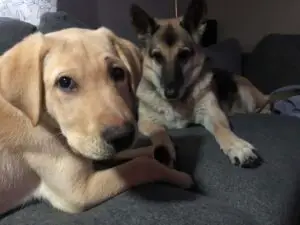
Havoc started coming with me to assist in my puppy classes. When young or fearful puppies were intimidated by larger dogs, she became my secret weapon. I can’t tell you how many times a parent of a teacup poodle or tiny doodle gave me a horrified look when I introduced the idea of their fragile little pup meeting a full-grown German Shepherd.
To most people, it doesn’t make sense.
A giant, under-socialized GSD helping tiny, nervous puppies?
But Havoc had a gift.
Within minutes, they understood.
She always began the same way:
She eased herself onto the ground — making herself smaller, softer, safer — and let the little ones approach at their own pace. As they sniffed her from a secure distance, she stayed still, breathing slow, communicating calm safety in a way humans often miss.
When they were finally brave enough to approach her face, she’d offer a subtle head tilt, her version of “Hello, little one.” More often than not, that tiny gesture unlocked playfulness, confidence, and joy in pups who had arrived trembling.
And she was just as magical with the opposite end of the spectrum — the wild, overstimulated, chaos-gremlins of puppy class. When play got too rough, I’d call Havoc in. Without a single correction, her steady energy would ground the entire group. The wild pups slowed down and sniffed her respectfully.
Watching her work taught me something I carry into every part of my life:
When you have a gift that lights you up, share it.
You never know who else it might help — or how far its ripple might reach.
And by embracing what lit her up, she made countless puppies braver, calmer, and more secure in their little bodies.
She didn’t just become my teacher — she became their teacher too.
The Day She Helped Us Choose Our Next Dog
Havoc didn’t just heal us in life — she also left us one of the greatest gifts she could have given: our next dog.
A few years after we adopted Havoc, we lost my daughter’s beloved Papillon to a brain tumor. The grief was heavy, and I knew immediately that my daughter needed another small dog to love. But now that we had a German Shepherd, getting a rescue to place a small dog with us was harder than I expected. Even with photos showing our last Papillon and Havoc curled up together, rescues weren’t willing to risk it.
Then I found a rescue on the other side of the state with a litter of Chihuahua-mix puppies. One in particular caught my eye — a cute little red-and-white girl. (Yes, I know, you shouldn’t choose a dog by looks alone… but we’re human.) My daughter, however, was drawn to a more classic-looking red puppy.
We agreed we’d meet them all. So we loaded up the whole family — including Havoc— and drove across the state.
The red-and-white puppy I had my heart set on took one look at Havoc and backed up, trembling.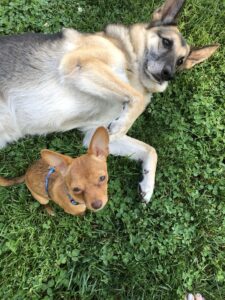
The red puppy, however?
Instant love.
She ran straight to Havoc with absolute confidence, tail wagging, sniffing her face, and offering a perfect little play bow. Havoc softened immediately, leaning down as if greeting an old friend.
It was chemistry — pure, undeniable, effortless.
So that day, we adopted a Chihuahua for Havoc. And she chose perfectly.
We named her Luna, and she has turned out to be one of the best dogs we’ve ever had. She’s athletic, confident, and up for any sport or training experiment I throw her way — which speaks directly to my dog-trainer heart.
As Havoc grew older and the cats realized they could knock her over (and absolutely exploited this), Luna became her tiny but fierce protector. Imagine a German Shepherd guarded by an 8-pound Chihuahua!
That day taught me a powerful lesson:
When the energy is right, it doesn’t matter what you originally envisioned — follow the connection.
Dogs don’t choose with logic. They choose with intuition, compatibility, and heart.
And sometimes, they make much better decisions than we do.
Closing: Her Legacy Is Stillness, Joy, and Love
There’s one more part of Havoc’s story that still feels miraculous to me.
When we adopted her, she was heartworm positive, and because of her age, we were told traditional treatment wasn’t safe. We focused instead on giving her a calm, low-stress life filled with joy, gentle movement, and connection.
And then—almost two years later—she was declared heartworm-free.
No one expected it. Not her vet. Not me. It felt like her quiet strength had rewritten her own story. It was a reminder that sometimes healing happens slowly, silently, and against the odds. And it became one more lesson in letting things unfold in their own time.
The final gift Havoc gave me was clarity when her time truly came.
I’ve struggled in the past with knowing when to let my animals go. There is always doubt, always hope, always that tiny fear that you’re making the wrong decision. And even though Havoc had been declining for a year, she still woke up every day searching for joy — digging in the yard, sunbathing, cuddling, watching birds, seeking out small moments that made her world feel warm.
Until the last 24 hours.
She lost the use of her hind legs.
She still sought me out, and I went to her to hold her head.
But she was tired.
And she trusted me enough to let me see it.
I sit now with the lessons she left me:
Be mindful about adding joy to each day. Joy is medicine, and it keeps us connected to life even in difficult times.
Slowing down isn’t laziness — it’s connection. The still moments are where the real bonding happens.
Share your gifts with the world. You never know how many others your light might help.
My other dogs have always been my training partners — the ones who helped me sharpen my mechanics, improve my timing, and refine my cues.
But Havoc?
She taught me how to be a better trainer — and a better human — by focusing on relationships first, behavior second.
In Conclusion
Havoc didn’t teach me through big, life-changing moments. She taught me through quiet ones — the soft nudges, the patient waiting, the tiny sparks of joy. She proved that progress doesn’t require perfection and that slowing down isn’t a luxury; it’s a lifeline.
Her legacy is now woven into every Joy List I make, every training session I teach, and every moment I remember to pause instead of rush.
If Havoc changed anything for you today, let it be this:
Choose one small joyful moment.
Let it matter.
Do it again tomorrow.
Beautiful article, Devene!
I follow you from Tracy Asuka, primarily looking for ADHD dog training advice for my GSD. Havoc and Klondike, my GSD, share similar background. Klondike progress is exactly as you described Havoc’s. This helps me look at her differently. Well written.
I’m so glad that it resonated with you! Thank you so much for taking the time to share this. That means more than I can say.
One of the hardest (and most freeing) moments with Havoc was realizing that progress didn’t always look like “fixing” things—it looked like understanding her story and adjusting my expectations with compassion.