
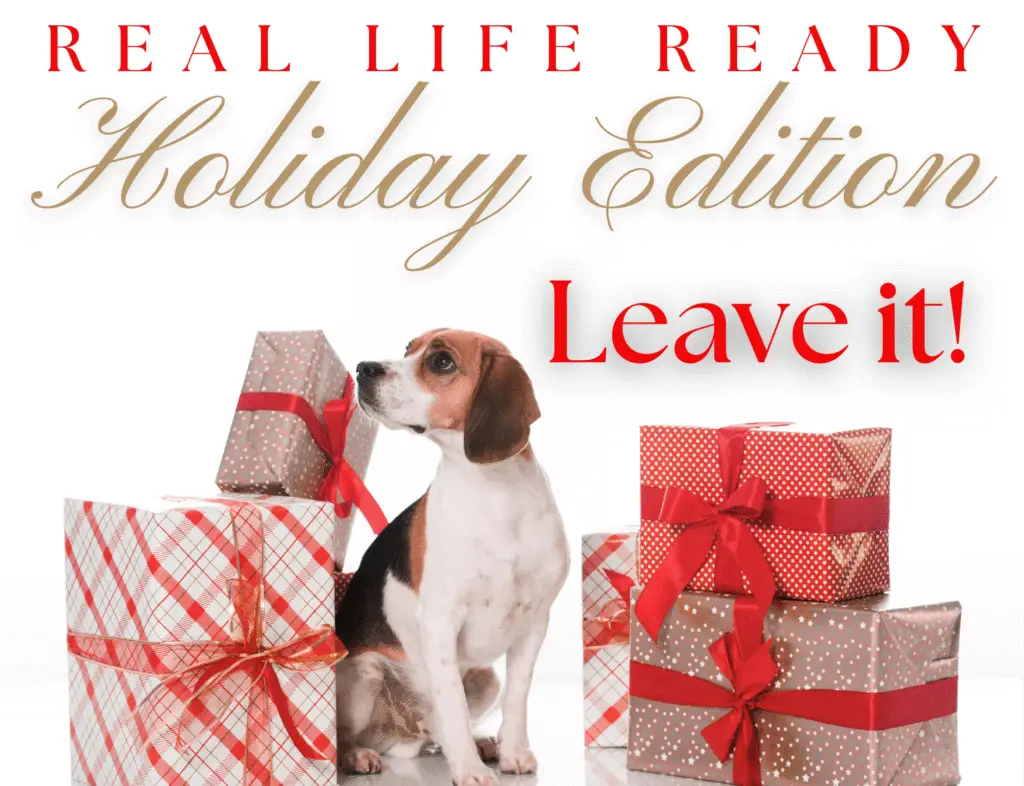
A step-by-step guide to improving your dog’s impulse control and creating a calmer holiday home through short, positive training sessions.
The holidays are basically a sparkle-covered impulse control test for dogs (and, let’s be honest, for us too). With the smell of roast turkey, shiny ornaments, and guests who think “just one cookie” won’t hurt, it’s no surprise your dog’s self-control takes a holiday of its own.
Teaching impulse control isn’t about perfection — it’s about helping your dog pause, think, and make better choices amid all that festive chaos. A solid “leave it” turns those tempting moments into connection moments — and that’s where the real magic happens.
Whether you’re teaching “leave it” for the first time or just brushing up on your dog’s skills, this doesn’t have to feel like a battle. It can be a fun, low-pressure game that builds focus, confidence, and your bond. So, take a break from the holiday hustle, grab some treats, and play your way to a calmer, more connected season together.
Redefining “Leave It”: What It Really Means
Traditionally, “leave it” meant “don’t touch that,” which sounds practical enough. But when I watched people demonstrate their dog’s leave it, it often looked more like a party trick than a real-life skill. A treat would be placed on the floor, the owner would say “leave it,” and after a few seconds, the dog would be released to grab it.
Now, that’s a fun game — but it’s not practical for everyday life. I’ve seen so many dogs tremble with anticipation, laser-focused on the forbidden treat, just waiting for permission to pounce.
So what happens when you need your dog to truly leave something — like dropped medication, a chicken bone on the sidewalk, or that shiny ornament under the tree — and never go back for it? We can’t change the rules mid-game and expect our dogs to understand.
When I teach “leave it,” I want my dog to pause, think, and disengage. They learn to check in with me for a reward and then walk away from the distraction entirely. Think of “leave it” as your dog’s impulse control muscle — the more you practice, the stronger and more reliable it becomes.
The Holiday Game Plan: Teaching “Leave It” Step-by-Step
Short, focused training sessions are your best friend here; think 2–3 minutes at a time. You can literally do this during commercial breaks of your favorite holiday movie!
The Foundation: Building Calm Focus
Our first goal is to create a history of rewards for calm, thoughtful behavior — not jumping, barking, or lunging toward the distraction (whether it’s a treat, toy, or shiny wrapping paper).
By using error-free, positive reinforcement, we make this a fun, confidence-building game.
How to start:
- Hold treats in your hand and lift it slightly (think Statue of Liberty pose).
- Watch your dog’s response. If they’re jumping or barking, the treat is too close — or too tempting.
- If they remain calm, mark (say “yes!” or click) and deliver the treat.
- Gradually bring the treat closer as they succeed, rewarding calm focus each time.
- If they regress (jump or bark), simply go back a step and reinforce the calmer version.
Your goal is to eventually bring the treat down near your dog’s nose level — but don’t rush it. Slow and steady builds solid impulse control.
Add The Cue: Teaching “Leave It” with Intention
Once your dog is reliably controlling their impulses, it’s time to pair that behavior with the “leave it” cue.
At first, the words don’t mean anything — you’re simply building an association. So focus on creating clarity: “Leave it” = look away from the distraction and check in with you.
Steps:
- Hold a treat out as a distraction.
- Say “leave it.”
- If your dog doesn’t reach for it, mark and reward from your other hand (or treat pouch).
- If they do try for it, calmly lift the distraction out of reach and try again.
Pro Tip: Rewarding from the opposite hand teaches your dog to look to you for reinforcement — not stare at the distraction.
Mix it up! Try different distractions: toys, paper towels, or that irresistible wrapping paper your dog keeps stealing.
Add Challenge: Building Real-Life Impulse Control
Dogs learn in pictures — meaning they remember what training looks like in one context, not all. So to make “leave it” reliable everywhere, practice in new environments and with new items.
Try this game:
- Drop a treat on the floor and cover it with your foot.
- When your dog looks away from the treat, mark and reward from your pouch or pocket.
- After three successful reps, add your “leave it” cue back in.
Pro Tip: When you first introduce this game, reward your dog with something even better than what they’re leaving behind.This teaches your dog that the cue means “ignore the temptation — something better is coming.”
Make It Real Life Ready: Holiday Edition
Before the big holiday, set up practice sessions that mirror real life — but start small.
For example, before Thanksgiving, practice around a plate of veggies rather than a full table of turkey and stuffing. Success builds on success!
Keep your dog on leash to prevent mistakes, but resist the urge to yank them away — it can create frustration and make your cue dependent on leash pressure.
Practice setup:
- Place food on a counter or table.
- Walk your dog on leash at a comfortable distance.
- If they don’t pull toward the food, mark and treat on the floor.
- If they do pull, increase distance and try again.
- Gradually close the gap as your dog remains calm, rewarding focus on you, not the feast.
- If they glance at the food use your “leave it” cue, mark and treat when they look away.
This transforms “leave it” into a true real-life skill your dog can use during the holidays and beyond.
Managing The Environment. And Your Guests!
Even with great training, it’s important to stay realistic. The holidays bring a lot of temptation — and sometimes opportunity. If there’s a turkey sitting unattended, chances are your dog’s going to at least consider a taste test!
And then there are the guests — the well-meaning ones who sneak your dog treats under the table or say, “Oh, just one bite won’t hurt.” If someone is offering your dog food, it’s a really high bar to expect them to resist.
That’s where management comes in. Think of management tools — baby gates, crates, leashes, or even closed doors — as ways to protect your dog’s training and their safety. If your dog manages to steal food from the counter, they’ve just rewarded themselves. And what gets rewarded gets repeated. So, you can bet they’ll be checking that counter again next time.
It’s also worth having a friendly chat with your guests before the festivities start. Ask them to check with you before giving your dog any food or treats. That simple step can save you a lot of frustration — and make sure your hard-earned training progress doesn’t get undone by one generous relative with a cookie.
Training Tips for Busy Owners
The holidays are busy enough without adding pressure to your training routine. Remember — the goal is progress, not perfection. Here are a few ways to keep “leave it” practice light, fun, and stress-free for both of you:
- Keep sessions short. Two or three minutes is plenty. Try habit stacking these exercises with something you already do every day — like brewing your morning coffee or winding down at night.
- Celebrate tiny wins. Every success, no matter how small, builds momentum. When training feels rewarding for both you and your dog, engagement naturally grows — and consistency becomes easier.
- Catch good choices in real life. Keep a few treats in your pocket or a treat jar nearby. If you notice your dog checking in with you or walking away from a distraction, mark and reward! Real-life reinforcement strengthens the behavior faster than any planned session.
- Treat struggles as information, not failure. If your dog struggles with a distraction, it just means you’ve found the next training step. Adjust the environment, simplify the exercise, or lean on management tools for now. Every “oops” is valuable feedback that helps guide your next session.
Wrap-Up: The Holiday Mindset Shift
This season, think of “leave it” as more than just a cue — it’s a moment of mindfulness for both you and your dog. It helps build impulse control, a skill that can be tricky for dogs and humans alike.
Remember: jumping up for treats or going after tempting items is completely natural for dogs. After all, getting closer to something they want is just basic physics! The goal isn’t to shame them, but to teach them new rules that help them thrive in our human world.
A few short training games each day — even just a couple of minutes — can create a strong foundation for this important cue. Over time, those small moments of practice will add up to big wins: calmer dogs, more connection, and a holiday season that’s fun, manageable, and joyful for everyone.