
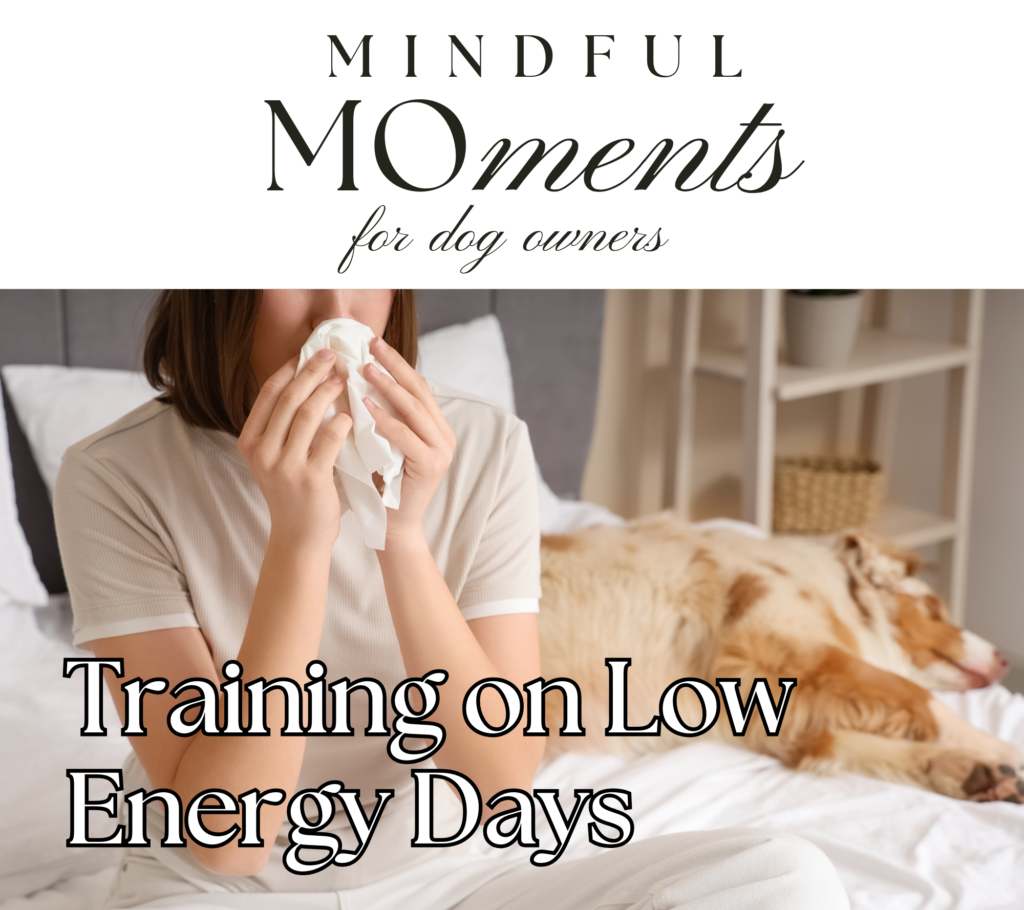
On those days when your energy is low, how does it affect your dog?
We all have them. Maybe you’re sick. Maybe life has been draining. Or maybe you’ve simply been overscheduled for too long. This is real life. But your dog’s needs don’t pause just because you’re running on empty.
When you’re trying to figure out how to take care of your dog when you’re sick, the question isn’t whether they still need enrichment and structure — it’s how to meet those needs without completely depleting yourself.
So what plans do you have in place for the days when you just don’t have the energy to give your dog what you normally would?
I’ve been sick off and on for almost two months. Some days are worse than others, but my energy hasn’t been at 100% for quite a while.
I come home tired and in desperate need to refuel body and soul before my responsibilities outside the house begin again. My body feels heavy. My mind feels foggy.
But my dogs? Their needs are exactly the same.
They need movement.
They need engagement.
They are used to our routine.
And they deserve at least that much.
But I also deserve a chance to reset.
When I feel this way, I know it’s my body asking me to slow down. And that’s where the frustration creeps in. Guilt that I can’t be the human they’re used to.
Why It’s Harder When We’re Sick (Especially with ADHD)
 When you’re sick, you don’t just lose energy.
Your executive function drops.
Decision fatigue increases.
Emotional resilience thins.
For those of us with ADHD, many of those things are already fragile.
We may have systems. We may have learned strategies. But add illness — or even a particularly stressful week — and suddenly the brain declares basic tasks impossible.
You can’t just power through it.
Meanwhile, your dog gets restless. You feel guilty. Without a plan, the frustration builds.
Important Reminder: You Matter
Before you get swallowed by guilt, pause.
What you need matters.
You are not failing your dog.
This is not long-term neglect.
This is a short-term adjustment.
If you neglect your own recovery, your body will take longer to heal (ask me how I know). Taking care of yourself helps you return to full capacity sooner — something both you and your dog benefit from.
This is the season to conserve energy. To simplify. And if you’re in the middle of a training plan, this is the time to choose maintenance over progress.
Let’s make a plan now, before you need it, so on the low-energy days, you don’t have to make decisions from an already depleted brain.
Shift the Goal: Maintenance
When you’re sick, don’t focus on building new behaviors.
Not only does that increase your stress, but your timing and clarity may be off, which can confuse your dog.
Repeat after me: Maintain.
Catch your dog doing something you like. Praise. Connect. Reinforce calm.
That still builds good behavior.
Also, be aware: we’re more likely to give in to behaviors that annoy us when we’re exhausted. If your dog barks for attention, you might cave just to make it stop. Instead, walk away briefly. Then return and proactively offer attention or enrichment before they escalate.
Practical Low-Energy Management Tips
Your dog still needs outlets. Let’s make those outlets easier.
Ask for Help
This is the hardest one for me. I hate asking for help. But I remind myself: it’s not for me, it’s for my dog. Ask a family member for a sniff walk—trade playdates with a neighbor. Accept support.
Chew Toys & Frozen Enrichment
Prep once. Benefit multiple times.
Choose toys that are easy to freeze and store so you’re not creating extra friction for yourself. The goal is low-effort, high-payoff. Make several at once so your future low-energy self doesn’t have to think. My favorites are listed below.
Environmental Rotation
Put most toys away and rotate 3–5 at a time. Novelty can buy you engagement without extra effort. Know your dog — some explore independently, others see every toy as an invitation to shove it in your face.
Hire It Out
If your dog does well with a walker or daycare, it’s okay to use that resource. Vet them when you’re well, so you have the option when you’re not.
Rent a Private Yard
If you don’t want social interaction but your dog needs exercise, renting a private space lets them run while you conserve social energy. Bundle up. Let them move. Go home and rest. You can look for yards to rent at SniffSpot.
Micro-Train
As you recover, ease back in. One cue. Five reps. Done. Don’t jump straight into full sessions.
Leave Clear Instructions
If family helps, make feeding amounts and routines obvious. A simple Dog Care Planner can prevent confusion when you’re too tired to explain.
Managing the Guilt
Here’s the most important part:
You don’t have to do all of this. Ask yourself: What takes the least effort while still helping us both get through today?
Some days, extra enrichment brings you peace. Some days, it’s simply keeping everyone stable.
This is temporary.
Your dog isn’t seeking perfection. They’re seeking connection. With a solid foundation, dogs are remarkably resilient.
In Conclusion
Low energy and dogs can feel like a mismatched pairing. But with thoughtful planning, you can create a system that supports your dog while protecting your recovery.
There are seasons when we are strong and steady for our dogs.
And there are seasons when we are simply trying to stay upright.
Both are part of a real life with dogs.
And both count.