
I never thought it would happen to me. But I hit 50, and before I knew it, I started exploring topics that used to make me roll my eyes a little.
Some happened by accident.
I was bored one Wednesday night when I saw that a local church was offering a free sound bath with Tibetan singing bowls. I honestly had NO expectations. So my daughter and I went, closed our eyes, and half an hour later, we emerged shocked by how relaxed we were.
It was like drinking a bottle of wine without the fog of intoxication.
And then, as part of a coaching program I was doing to find motivation (my ADHD brain is always looking for new ways), we were offered a free online breathwork session. Not one to miss anything that’s free (I like a bargain), I joined with no expectations.
I ended up having an intense energy release. I’ll admit it—I cried.
I have no idea why. All I know is that I came out the other side feeling incredibly relaxed.
Meditation was something I had tried for years, but I was always too fidgety and antsy. The more I tried to quiet my mind, the louder it seemed to get.
But after years of trying—and deciding that meditation simply wasn’t going to work for me—I found a teacher who just resonated with me.
So, just like that, I became a midlife cliché.
I felt better. I was calmer. And I started noticing something else: I was able to focus and absorb information more easily.
And that was when things started getting really interesting for me as a dog trainer.
Because I realized I had been preaching this for years.
Table of Contents
ToggleOf Course I Knew Why
We talk about it in dog training classes all the time.
Arousal and stress affect learning. Asking our dogs to do more when they’re overwhelmed usually just makes matters worse.
So when we see it happening, we lower our criteria, give the dog a brain break, or step back and assess what might be stressing them out in the first place.
Maybe the environment is too stimulating. Maybe the training has gone on too long. Maybe we’ve simply asked for more than the dog is ready to give us in that moment.
This is basic dog training.
I knew all of this.
I could explain why stress affects a dog’s ability to focus. I could talk about thresholds and arousal levels and why creating the right conditions for learning matters.
So I understood it intellectually.
But there is a difference between understanding something and feeling it happen in your own body.
Finding the Systems That Work
I’ve learned to have an open mind.
As I mentioned above, I wasn’t expecting any of these practices to affect me the way they did. So I’ve started exploring other things, too.
A lot of people use EFT tapping, and I haven’t found that it works for me—yet. As with meditation, I may simply need the right instructions or teacher to make it resonate. I also love forest bathing, both with my dog and without.
And I’m open to exploring and discovering other ways to help keep my nervous system in check.
Of course, my ADHD brain has something to say about all of this.
Every time I try something new, I immediately start worrying about the time commitment. When am I going to fit this in? I don’t have time for another thing!
But experience is starting to teach me something different: when I do something that helps regulate my nervous system, I actually get more done.
More often than not, I write after spending at least an hour forest bathing. I can focus more. I can sit for longer. And it feels much more peaceful to sit down and write.
So while that neurodivergent tendency to panic about time is still very much present, I’m learning to train my brain based on my past experiences.
I can remind myself: You know what happens when you take this time. You come back more focused, more productive, and better able to do the things you need to do.
And, of course, the dog trainer in me still wanted science to back up what I was experiencing.
It turns out there is a growing body of research exploring how practices such as meditation, breathwork, and other forms of stress reduction can affect things like attention, stress, emotional regulation, and learning.
Maybe my inner middle-aged cliché was onto something after all.
This Is The Same With Dogs
We have plenty of activities that can help calm a dog’s nervous system. But just like us, individual dogs may be drawn to different things.
I love using sniffing to help dogs decompress. Research suggests that sniffing can help lower heart rate and support more positive emotional states. But I’ve had plenty of people tell me, “My dog doesn’t like to sniff.”
Sometimes, though, the dog doesn’t actually dislike sniffing. They just haven’t learned how to engage with it—or we haven’t found the right way to offer it.
I once had a student try to replicate a food-based “box work” game she had seen on YouTube. She was frustrated because her dog had absolutely no interest.
So we experimented.
It turned out the dog didn’t like boxes.
Once we changed the setup and made the game look different, that same dog started getting excited about it.
The lesson wasn’t that enrichment didn’t work for her dog. We just hadn’t found the right version of it yet.
The same thing can happen with walks.
A walk might help one dog decompress, while for another dog, all those sights, sounds, smells, and other animals can wind them up and spike their arousal.
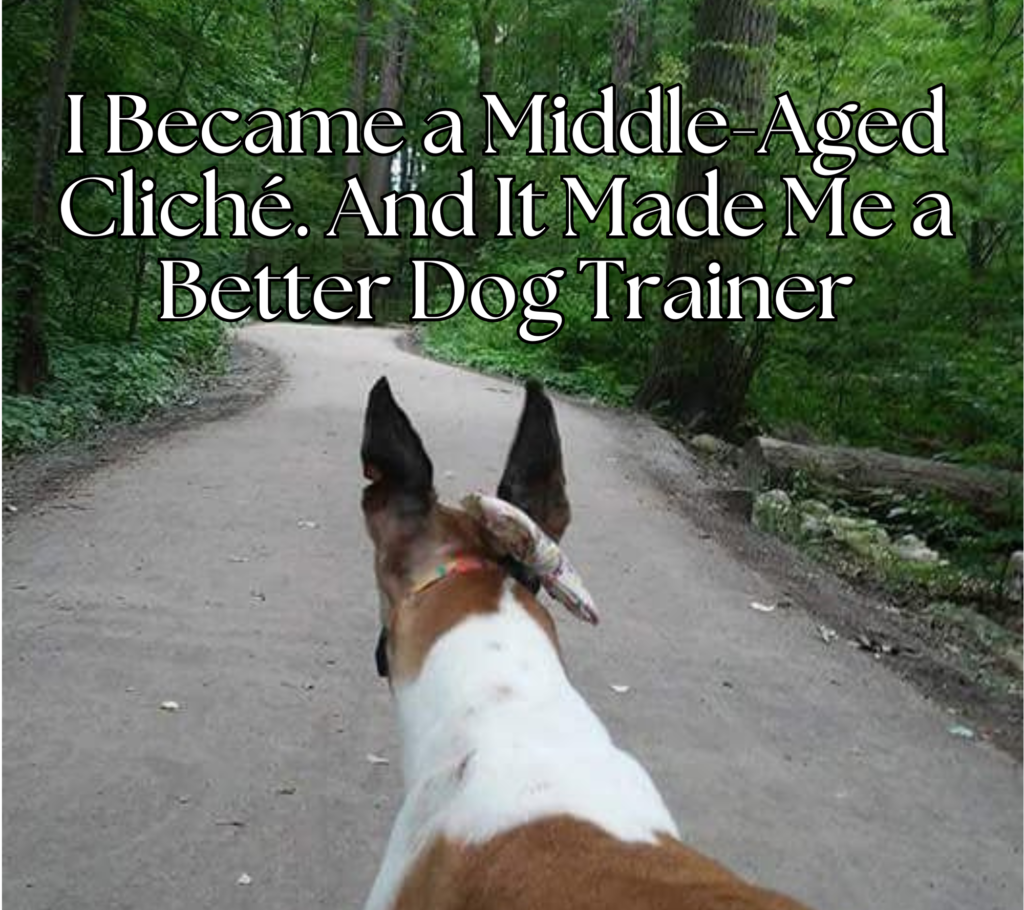
For instance, I take my Labrador to an off-leash, fenced, wooded trail near me. She wanders, sniffs, explores, and comes home tired and content.
If I took my Chihuahua on that same adventure, all of the new sights, other animals, and unfamiliar surroundings would likely spike her arousal. If she lost sight of me, she would panic.
One dog’s heaven can be another dog’s hell.
And that’s why I think it’s so important to approach our dogs the same way we are learning to approach ourselves.
There isn’t one magic activity that regulates every nervous system.
So let’s experiment. Let’s pay attention. Let’s notice what our dogs are telling us.
And just like we explore what helps us feel calmer, more focused, and ready to learn, let’s explore what works best for our individual dogs.
What This Changed About How I Train Dogs
Sometimes we understand something so well intellectually that we forget there is another level of understanding: experiencing it.
I can now actually feel the difference in my ability to learn when I’m regulated.
Because of that, my focus has shifted much more from the mechanics of dog training to the nervous system on both ends of the lead.
I know that when we teach ourselves and our dogs ways to regulate and self-soothe, training doesn’t just become more fun—it can become more successful, too.
If I see a dog—or a person—who is stressed or overwhelmed, I want them to know that they can take a moment to take care of themselves.
In fact, sometimes the best thing you can do is simply give both you and your dog permission to slow down.
I created this video to show you one simple way to do just that, using a combination of breathwork for you and a calming activity for your dog. Or take a deeper dive with this article.
And I like to remind my clients that calming down doesn’t mean becoming perfectly calm.
That’s not a realistic goal for us or our dogs.
The goal isn’t perfect calm.
The goal is getting into a state where learning is possible.
In Conclusion
I want to invite you to find what brings you focus.
Don’t be afraid to try things that might sound a little too out there. You might discover that something you once rolled your eyes at is exactly what your brain and body needed.
And then, do the same with your dog.
Explore. Experiment. Pay attention to what helps them feel safe, settled, and ready to learn.
Because when you understand what helps regulate both of you, you have tools to reach for when either one of you needs a moment.
Before You Train
- Notice.
What’s happening in your body? Are you rushed, frustrated, distracted, or overwhelmed? - Breathe.
Take a few slow breaths. Give yourself a moment to reset. - Observe your dog.
Are they available to learn? Or are they overwhelmed, overstimulated, or distracted? - Adjust.
Lower the criteria if necessary. Change the environment. Take a break. Find something that helps your dog regulate. - Begin.
Start with something your dog knows. Give them an easy win and let learning build from there.
Because sometimes the most important part of dog training happens before you ever ask for a behavior.
You create the conditions for learning.
For your dog.
And for yourself.
Resources:
During this journey, I found that the right teachers really helped me feel aligned with these practices. While this is a personal choice for each person, here are some of the tools that helped me:
Stress Less, Accomplish More By Emily Fletcher
A great book that teaches meditation techniques.
Healing Your Anxiety Through Breathwork By Samantha Skelly
An audiobook that guides you through several breathwork techniques.
Please note: This post may include affiliate links. If you make a purchase through these links, I may earn a commission, at no additional cost to you.